on Google


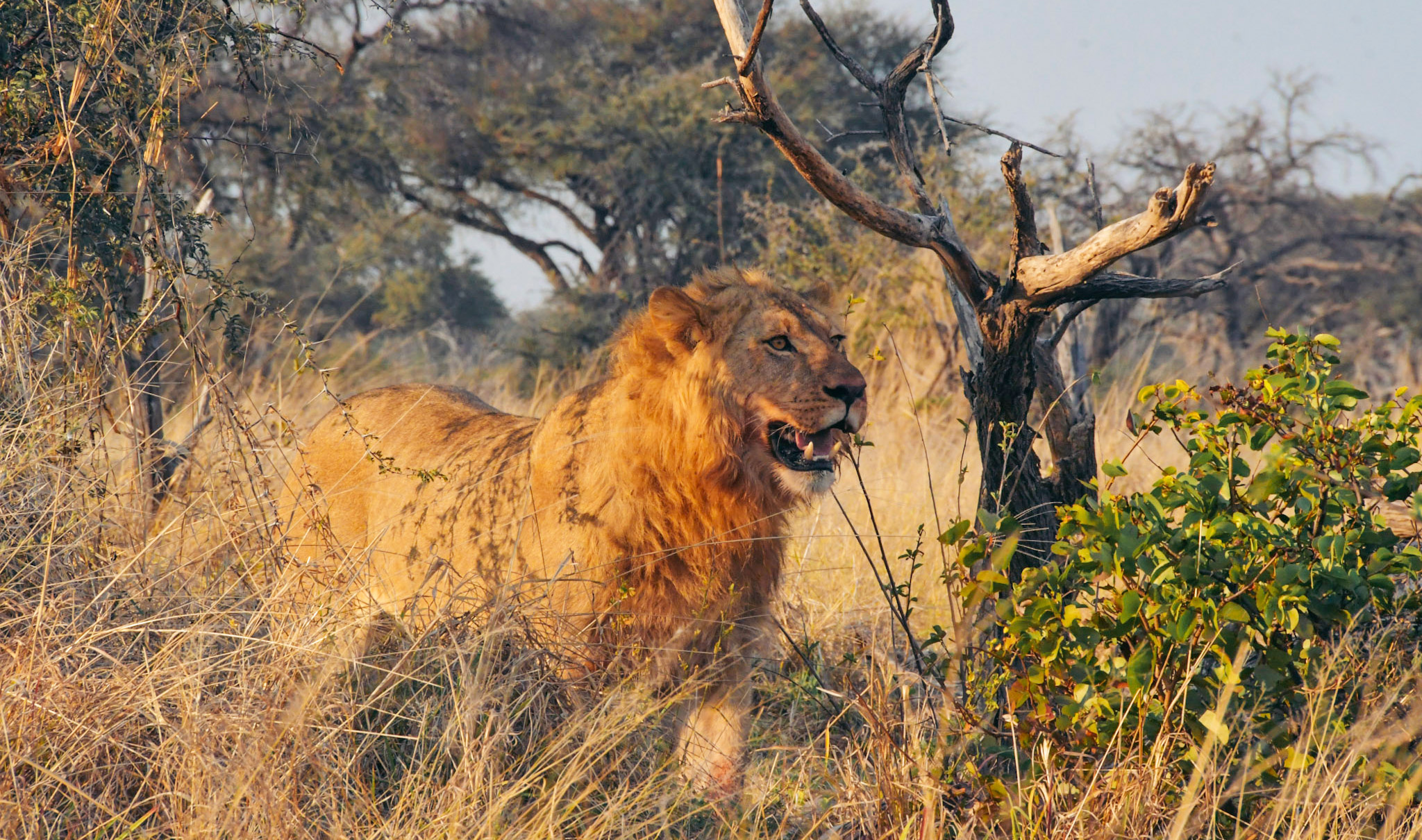
A particular kind of silence falls over a safari vehicle the moment a guide cuts the engine and points.
Your body alert, heart rate up, breath shallow, eyes locked on a shape in the grass or a movement in the tree. Then the shape moves, and you are looking at a lion, or a leopard draped along a branch, and the sound of bush falls away.
The first time is unforgettable. It’s not just excitement. It’s something closer to reverence and wonder.
And if you’re lucky enough to watch a hunt unfold, the feeling gets more complicated. You find yourself rooting for predator and prey at once.
This is what draws people back to South Africa time and again, and it’s why we get asked one question more than any other: where, exactly, should I go to see big cats in South Africa?
The answer comes down to four areas:
- The Greater Kruger, in the north-east, is home to Kruger National Park, which shares its unfenced border with private reserves, like Sabi Sands and Timbavati, and is the best place to go.
- Two separate destinations round out the lion-and-cheetah picture: malaria-free Madikwe, near the Botswana border in the north-west, and KwaZulu-Natal’s Phinda and Hluhluwe-iMfolozi, on the east coast.
- The Kalahari, in the Northern Cape, is where the rarer cats live, at reserves like Tswalu Kalahari.
- And the Cape, in the south, has cats you’d never expect to find — from Cape Town itself to Addo, Tsitsikamma and Shamwari further along the coast.
If that’s all the information you need, scroll to the bottom to find out how to plan your big-cat safari. Alternatively, here’s what lives in each region, and how to see them.

Which Wild Cats Live in South Africa?
The Three Big Cats in South Africa
South Africa is home to six wild cat species: lions, leopards, cheetah, caracal, serval and black-footed cat, but three draw most of the attention first.
Lions are the most numerous, with healthy prides across Kruger, Sabi Sands and Timbavati. However, global numbers have fallen to around 24,000, down from 200,000 in 1900.
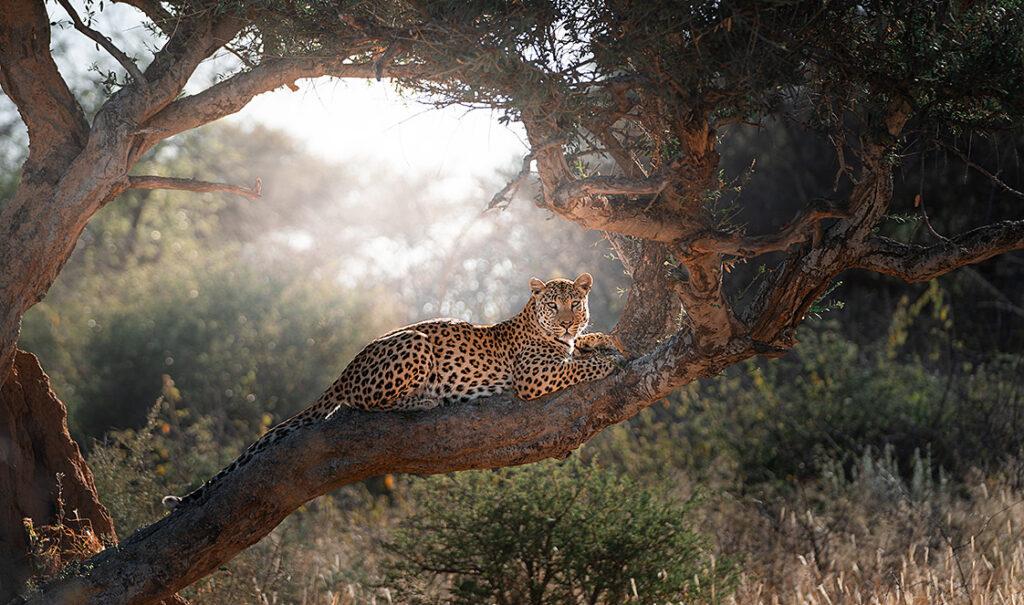
Leopards are the most adaptable, ranging from Kalahari scrub to Mpumalanga forest, though Panthera’s research shows they’ve vanished from two-thirds of their historical range — Sabi Sands remains the best place to find one.
Cheetah are rarer still, with only 7,100 left in the wild; Sabi Sands and Timbavati’s open grassland gives them the sightlines their high-speed hunts need. Keep your eyes peeled for the king cheetah, a genetic rarity last confirmed in the wild in Kruger back in 1986.
Seeing any one of these species, given their decline, carries more weight than it once did. Any sighting, be it the thrill of a hunt or the less adrenaline-filled view of sleeping lions, is an immense privilege.
South Africa’s Smaller and More Secretive Cats
Three more cats prowl South Africa, each harder to find than the last.
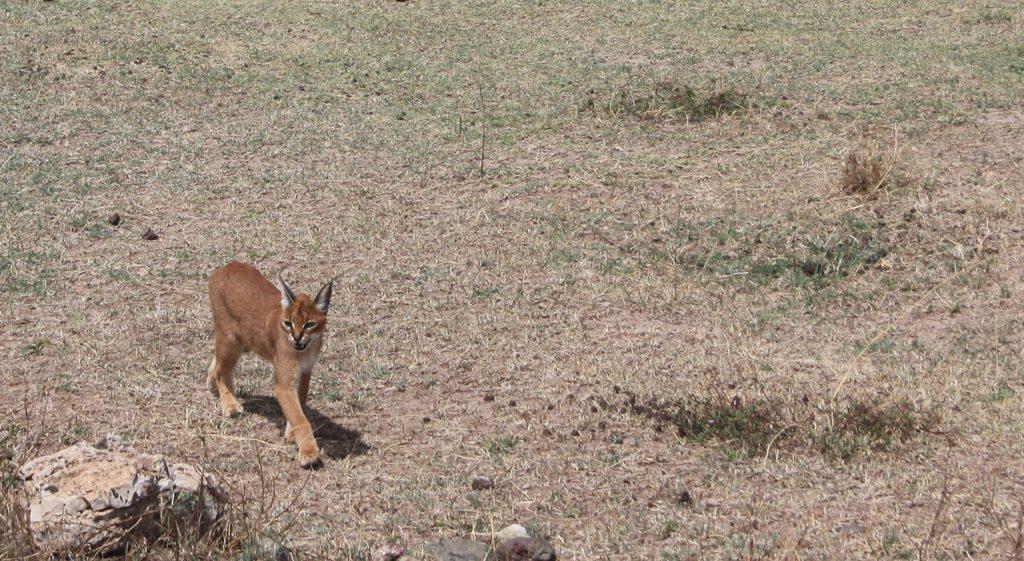
Caracal and serval both live around Kruger and Sabi Sands, though sightings are rare and entirely down to luck. Some guests have seen a serval crossing the road at dusk or a caracal hunting in long grass.
The black-footed cat is Africa’s smallest at ~2 kg, with females at just 1–1.5kg. Yet pound for pound it’s the most successful hunter of any cat alive. Afrikaans farmers call it the miershooptier, the “anthill tiger,” for the termite mounds it dens in by day.
Sightings are so rare that most guides go a whole career without seeing one, but visiting the Karoo and Kalahari offer the best chance.
More on these three shortly.

Greater Kruger: Lions and Leopards
Kruger National Park
Almost every South African big-cat journey begins in Johannesburg. It is the gateway to the Greater Kruger – a vast, largely unfenced ecosystem where lion, leopard and cheetah roam freely alongside elephant, buffalo and rhino.
Kruger National Park is the obvious starting point: a wilderness on a nation-sized scale. As it’s a public park with an extensive road network, it’s also one of the most accessible and affordable ways to see all three big cats in a single visit. The trade-off is that you’re confined to roads, so a leopard sighting comes down to patience and luck.
For self-drivers, SANParks’ rest camps such as Skukuza and Lower Sabie offer simple, budget-friendly stays; for five-star comfort inside the park’s own boundaries, Singita Lebombo and Sweni sit on a private concession.
Sabi Sands and Timbavati
If leopards are the reason you’re travelling to South Africa, head to Sabi Sands instead.
This private reserve shares an unfenced border with Kruger, so the wildlife is identical. However, decades of calm, considerate guiding mean the leopards have grown up around vehicles, offering far longer, closer sightings, and a great spot for photography.
For something wilder, neighbouring Timbavati has a rawer character. It’s also the home of the rare white lion, and some of the most reliable wild dog sightings in the region.
Fly-in safaris are a great option. A light aircraft from O.R. Tambo to Sabi Sands takes ninety minutes. Alternatively, board a scheduled flight into Kruger Mpumalanga Airport followed by a road transfer.
For Timbavati, you can fly in from Johannesburg over the bushveld in ninety minutes.

Madikwe and KwaZulu-Natal: Lions and Cheetahs
Two more destinations round out the lion-and-cheetah picture.
Madikwe, on the Botswana border, is a good option for families and is one of the best reserves in the country for lion, cheetah and African wild dog. As no day visitors are allowed, you can enjoy sightings without other vehicles around.
In the east, KwaZulu-Natal’s andBeyond Phinda Private Game Reserve spans seven varied ecosystems and offers some of the most consistent cheetah sightings anywhere.
Hluhluwe-iMfolozi, also in KwaZulu-Natal province, is Africa’s oldest reserve, whose entire lion population was founded by just five animals reintroduced in the 1960s. The bottleneck was so severe that conservationists later had to bring in new lions from Pilanesberg and Madikwe itself to keep the gene pool healthy.
The Kalahari’s Rarest Cats
The black-footed cat is the most successful hunter of any cat alive. If you are very lucky, you’ll see them in the arid Karoo and Kalahari; however, bear in mind they are rarely seen by anyone, guides included.
Tswalu Kalahari, in the Northern Cape, is one of the only reserves anywhere with confirmed sightings, alongside desert-adapted black-maned lions and the reserve’s famous “Elusive Five.”
If this cat is genuinely the reason for your trip, Tswalu, with its own private vehicle, guide and tracker for every stay, is your best, and possibly only realistic chance.
The Cape and Karoo: Cats Beyond the Classic Safari
Flying into Cape Town doesn’t mean leaving the cats behind. The Western and Eastern Cape hold their own surprising cat story.
Cape Town’s Caracals
Cape Town has its own resident cat, and it needs no itinerary: caracals live wild across Table Mountain National Park, right on the city’s doorstep.
Since 2014, the University of Cape Town’s Urban Caracal Project has GPS-collared dozens of them, tracking individuals that hunt along vineyard edges, hiking trails and suburban fringes barely minutes from the city centre.
Sightings are genuinely possible on Table Mountain itself, around Silvermine or Tokai, or even in Kirstenbosch’s gardens. Still, they are wild, wary cats, not a guaranteed encounter.
Their biggest threat isn’t poaching but roads, so if you’re driving the Peninsula at dawn or dusk, drive carefully.
Addo, Tsitsikamma and Shamwari
Touring the Garden Route? Three more stops to see big cats in South Africa are worth knowing:
Tsitsikamma National Park isn’t a Big Five park, but the rare Cape mountain leopard roams its forests, while Addo Elephant National Park gives you a chance to see reintroduced lions and elusive leopards; however, cheetahs don’t naturally occur there. Our South Africa – Experience the South tour takes you to both.
Shamwari, a fantastic conservation story in the Eastern Cape, has wild, free-roaming lions, leopards and cheetahs, plus two Born Free Foundation sanctuaries for cats rescued from circuses and captivity worldwide. Perfect on a private safari.
When Are the Best Chances to See South Africa’s Wild Cats?
Our full travel advice on the best time to visit South Africa goes into this month by month, but the best time to see South Africa’s big cats is the dry winter months, roughly May to October, with June through September the peak season for predator sightings.
At this time of year, drying landscapes and thinning vegetation mean animals never stray far from permanent water sources.
Don’t overlook November to February. This is calving season across the region, and with vulnerable young antelope everywhere, predators are noticeably more active, even though greener bush takes a little more patience to see through.
The Threats Facing Small and Big Cats in South Africa
Habitat fragmentation and human-wildlife conflict on the edges of protected land continue to squeeze every species in this guide, and smaller cats like the black-footed cat and African wild dog are especially vulnerable simply because they need so much undisturbed space to survive.
The good news is that the model working best right now is the unfenced reserves like Kruger, Sabi Sands and Timbavati sharing one connected ecosystem, and reserves that fund conservation directly through tourism.
So, if you are a lover of Africa’s cats, you can support them just by choosing to visit some of these incredible reserves. Every night spent on a well-run reserve helps keep these landscapes wild enough for the next generation of cats.
Favourite Tour:
Kruger Fly-In Safari
Places Great Kruger
from getting current exchange rate… per person sharing
South Africa’s North & East Coast
Places Drakensberg Mountains, Durban, St. Lucia, iSimangaliso Wetland Park, Hluhluwe-iMfolozi Game Reserve, Pongola Game Reserve, Eswatini, Greater Kruger, Panorama Route
from getting current exchange rate… per person sharing
Quick Answers to the Questions We’re Asked Most
Where is the best place to see leopards in South Africa?
Sabi Sands is the best place to see leopards in South Africa. Decades of considerate, unhurried guiding have made the reserve’s leopards comfortable around vehicles. As a result, sightings here are closer, calmer and last longer.
Is Kruger or Sabi Sands better for big-cat sightings?
Kruger is the better-value, more accessible choice for a first Big Five trip, with all three big cats present across its self-drive road network. At Sabi Sands, big-cat sightings are just as good; however, it is the best choice if leopards are the priority. It shares Kruger’s ecosystem, and exploring with specialist guides means closer, longer sightings.
Which wild cats live in South Africa besides lions, leopards and cheetahs?
Beyond lions, leopards, and cheetahs, three other cats live in South Africa: caracal, serval, and black-footed cat. Caracal and serval are occasionally seen around Kruger and Sabi Sands. Caracal also live inside Cape Town itself, living wild across Table Mountain National Park. The black-footed cat, South Africa’s smallest and most efficient hunter, is found only in the arid Karoo and Kalahari, and is very rare.
Can you see caracals or black-footed cats on safari?
If you are lucky, you can see caracals in Kruger and Sabi Sands. They also live in Table Mountain National Park. For a black-footed cat, you’ll need to head to the Kalahari specifically; Tswalu Kalahari Reserve offers the best and most reliably documented chance.

Plan Your South African Wildlife Safari with Our Experts
Not sure where to start to see big cats in South Africa? Fly into Johannesburg and base yourself in Kruger or Sabi Sands. It’s the most reliable place in the country to see all three big cats.
Our Jewels of the North & East small group tour travels through the Greater Kruger, and offers great value for first-time travellers to Africa.
If you are flying into Cape Town to visit the Winelands, travel the Garden Route, and see big cats, consider our South Africa – Experience the South tour, which takes in this exact route and finishes with both Tsitsikamma and Addo.
Couples seeking privacy can fly into Sabi Sands and stay at Londolozi, still the region’s gold standard for accommodation. Or plan a tailor-made safari, and design the whole trip around exactly what you want to see.
Return visitors chasing rarer cats belong in the Kalahari, particularly Tswalu’s camps, and anyone extending a Cape Town trip will find Shamwari’s Sindile a rewarding add-on.
Photographers should ask about our photo safari tours with a private vehicle and guide.
If you are ready to start planning your trip, please get in touch.